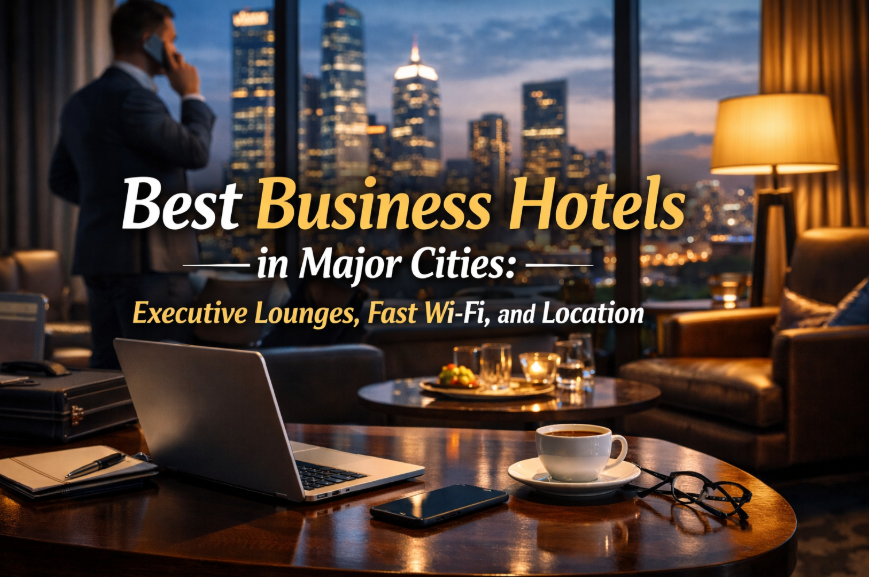
Business travel is a moving chessboard, and your hotel is the square you return to between every strategic play. A truly business-friendly hotel doesn’t just give you a bed—it gives you a rhythm. It gives you quiet when you need focus, speed when you need momentum, and location when you need control over your schedule. If you’ve ever sprinted through a lobby with a laptop bag, praying your next call won’t drop, you already know the truth: a “nice” hotel isn’t enough. The best business hotel in a major city needs executive lounge value, reliable fast Wi-Fi, and a location that behaves like a shortcut through traffic.
This guide breaks down what matters most for corporate travel planning, executive trips, conference stays, and client-facing business itineraries—without fluff, without vague promises, and with the specific hotel features advertisers love because they signal premium business travel intent.
Why Business Travelers Choose the “Right” Hotel
A smart business traveler chooses a hotel the way a pilot chooses a runway: it must be safe, predictable, and designed for performance. When your calendar is stacked and your inbox is a storm, the right business hotel acts like a calm control tower. You check in fast, you work efficiently, you sleep deeply, and you leave on time. That’s not indulgence—it’s operational excellence.
Time efficiency becomes your real currency on work trips, so business travel accommodation that reduces friction is worth more than fancy décor. A hotel with quick access to a financial district, a convention center, or a corporate headquarters can save you an hour a day, and that hour often becomes the difference between a polished presentation and a panicked scramble. Think of a high-performing business hotel like a well-designed tool: it feels invisible because it just works.
Comfort matters too, but not in a “gold-plated taps” way. Business comfort is functional comfort. a desk that supports your posture. lighting that doesn’t tire your eyes. It’s soundproofing that protects your sleep. It’s staff that understands you’re not on vacation—you’re on mission. When a hotel gets those details right, you don’t just stay there—you operate from there.
The Three Non-Negotiables: Lounge, Wi-Fi, and Location
If you want to identify the best executive hotel quickly, look at three pillars: executive lounge access, fast Wi-Fi stability, and location convenience. These three features work like a tripod; remove one, and the entire experience wobbles. A luxury-looking hotel without strong Wi-Fi is just a shiny trap. A centrally located property without a quiet lounge turns into a noisy waiting room. A hotel with a lounge and Wi-Fi but far from business hubs becomes a commute problem disguised as comfort.
Executive lounge access is your built-in upgrade from “room-only” to “business ecosystem.” It gives you a calm place to sit, a reliable stream of coffee and snacks, and a semi-private environment that feels like a soft-edged boardroom. For executive travelers, lounge perks aren’t just nice—they’re productivity multipliers.
Fast Wi-Fi is obvious, yet it’s where many hotels still fail. It’s not enough to have “free Wi-Fi” on the booking page; the best business hotel Wi-Fi must handle Zoom calls, VPN connections, large file uploads, and multi-device usage without collapsing at peak hours. In 2026 business travel standards, stable internet is as essential as running water.
Location is the final power move. A prime business hotel location reduces taxi reliance, reduces stress, and gives you options when meetings shift. The best city business hotels sit near transit lines, walkable dining, and corporate corridors. A strong location is like having extra time built into your day—quietly, automatically, every single hour.
What “Executive Lounge Access” Really Includes
Executive lounge access can mean different things depending on the brand and the city, but the best executive club lounges share a familiar feeling: calm, curated, and quietly premium. Picture a space that feels like a library crossed with a boutique café. You walk in, and the noise falls away. You find a comfortable chair, open your laptop, and it’s like the hotel suddenly becomes your office branch downtown. For corporate travelers, that environment is priceless because it turns “dead time” into productive time.
The best executive lounge benefits include breakfast that saves you time, light day snacks that prevent unnecessary spending, and evening refreshments that can replace an entire dinner when you’re exhausted. Many lounges also provide meeting-friendly seating, business services, and staff who can assist quickly without the lobby chaos. If you’re doing client meetings, a lounge becomes a discreet pre-meeting warm-up zone where you can refine your talking points and step into your appointment feeling composed.
Food and beverage access isn’t just about free perks—it’s about decision fatigue reduction. On intense travel days, having consistent lounge dining options means you don’t waste mental energy finding meals, dealing with crowded restaurants, or waiting on room service. And if you’re networking at conferences, lounges often act like informal corporate crossroads where executives drift in and out, creating quiet opportunities for connection. Think of it as a soft social accelerator—low pressure, high potential.
Wi-Fi, Tech, and In-Room Workflows That Actually Work
Fast hotel Wi-Fi for business travelers is not a bonus feature—it’s the backbone of remote work productivity. The best business hotels invest in strong bandwidth, stable coverage, and infrastructure that supports modern business tools. You should be able to join a high-definition video call, share screens, upload proposals, and keep VPN sessions stable without doing the “Wi-Fi dance” around the room like you’re chasing a signal ghost.
But tech readiness goes beyond internet speed. A true business-friendly hotel room setup includes a real work desk, accessible power outlets, strong task lighting, and a chair that doesn’t punish your spine after 30 minutes. If the room layout forces you to work from the bed, the hotel is quietly stealing your performance. The best corporate hotels design the room like a mini workstation, because they know executives don’t “log off” just because the sun sets.
Business travel tech amenities also include practical extras like on-site printing, scanning, and meeting rooms. Some premium business hotels offer dedicated business centers, IT support, and quick access to adapters or cables when you forget something. These services may sound small, but they’re like spare tires on a long highway drive—you don’t notice them until you need them desperately. And when you do, having them instantly available feels like the hotel is reading your mind.
City-by-City: What to Prioritize in Major Business Destinations
In New York City, the best business hotel strategy is reducing transit friction. Midtown and Downtown locations that connect quickly to corporate offices, financial institutions, and conference venues are gold. Executive lounge access matters because NYC days are long and meals are expensive, so lounge value becomes a real budget advantage. Wi-Fi reliability is critical because you’ll likely be coordinating across time zones and doing early morning or late-night calls from your room.
In London, proximity to major transport nodes—like key Underground lines and business corridors—becomes the differentiator. A premium business hotel in London should offer quiet rooms, good soundproofing, and lounge spaces that provide refuge from the city’s constant movement. Fast Wi-Fi in London hotels matters because meetings often rely on cloud documents and real-time collaboration, and you want your workflow to feel seamless.
In Singapore, business hotels compete on efficiency, so your focus should be location near Marina Bay, Raffles Place, Orchard, or convention-linked areas depending on your schedule. Singapore business travel comfort often includes excellent service speed, strong security, and reliable tech infrastructure, making it a favorite for regional executive travel. A high-quality executive lounge here often feels like a premium workspace with polished dining options.
In Tokyo, business hotel selection is about connectivity and calm. Choose locations near major rail hubs and corporate districts so you can glide between meetings without stress. Tokyo hotels can be exceptionally organized, but room sizes vary, so a business-ready layout matters. Strong in-room lighting, comfortable desk setups, and stable Wi-Fi turn a compact room into a powerful productivity pod.
Best Neighborhoods for Business Hotels
Financial districts are the classic business hotel base because they place you close to banks, headquarters, and executive offices. If your trip is client-heavy, staying near financial corridors gives you predictable travel time and professional surroundings. You can step out and find meeting-friendly cafés, formal dining, and business services without hunting for them like a tourist.
Convention center zones are ideal for event-driven trips. If you’re attending conferences, trade shows, or corporate summits, being close means fewer transport surprises and more energy for networking. A business hotel near a convention center becomes an extension of the event itself—fast check-in, quick breakfast, easy return for wardrobe changes, and a reliable place to reset between sessions.
Airport corridors are strategic for ultra-short trips, layovers, and early flights. If you’re flying in for one meeting and flying out fast, an airport-adjacent business hotel reduces commute risk. The best airport business hotels now include executive lounges, meeting rooms, and premium dining, making them less of a compromise and more of a tactical choice.
How to Book the Best Corporate Hotel Rates
Corporate hotel booking is about stacking small advantages until your entire trip becomes smoother. Start with corporate codes and negotiated rates when available, because business hotel discounts can include breakfast, lounge access, and flexible cancellation policies. Flexibility is a hidden luxury for executives, because meeting schedules shift like weather, and strict policies can turn minor changes into expensive mistakes.
Hotel loyalty programs are another quiet weapon. Status often unlocks executive lounge access, late checkout, upgrades, and priority support. If you travel frequently, loyalty perks become a compounding investment. It’s like planting a productivity tree—each trip gives you a little more shade. And if you’re booking for a team, loyalty and corporate partnerships can sometimes improve group travel value through bundled benefits.
Amenities Executives Notice Immediately
Soundproofing and sleep quality are the first “invisible” features executives feel. A hotel can look stunning, but if hallway noise wakes you up, your next day suffers. The best business hotels invest in quality bedding, blackout curtains, and rooms designed to protect sleep like a vault protects valuables. When you wake up refreshed, your work quality rises without effort.
Fitness, wellness, and efficient dining also matter more than many people admit. A 24/7 gym supports time zone chaos. Quick healthy dining prevents energy crashes. Fast room service or lounge dining reduces schedule disruptions. These amenities aren’t about indulgence—they’re about maintaining performance during high-pressure travel.
Red Flags to Avoid When Choosing a Business Hotel
Hidden fees are a common business travel annoyance, especially when hotels charge extra for Wi-Fi tiers, breakfast packages, or business services. Transparent pricing is a sign of a premium business hotel that respects corporate travelers. If you feel nickel-and-dimed at check-in, it’s a clue you’ll likely be inconvenienced later too.
Weak security and inconsistent Wi-Fi are the two biggest dealbreakers. If the network feels unstable or you can’t trust the hotel’s digital setup, your business data and productivity are at risk. A professional executive hotel should make you feel safe, supported, and connected without constant troubleshooting. If you have to fight the hotel, you’re spending energy on the wrong battle.
Conclusion
The best business hotels in major cities aren’t defined by flashy lobbies—they’re defined by smooth days. When you choose a hotel with a strong executive lounge, genuinely fast Wi-Fi, and a strategic location, you’re not just booking a room—you’re booking control. You’re buying back time, reducing stress, and setting yourself up to perform like a pro even when you’re miles from home. So the next time you plan a business trip, remember: the right hotel isn’t where you sleep. It’s where you win the day.
FAQs
1) What makes a hotel truly business-friendly?
A truly business-friendly hotel combines fast Wi-Fi, a practical work setup, quiet rooms, and a location near key business hubs for maximum productivity.
2) Is an executive lounge worth paying for?
Yes, executive lounge access often pays for itself through breakfast, snacks, quiet workspaces, meeting-friendly seating, and time-saving convenience.
3) How can I check if a hotel has reliable Wi-Fi?
Look for business traveler reviews mentioning video calls and VPN stability, and prioritize premium business hotels known for strong tech infrastructure.
4) Should I stay near the airport or downtown for business travel?
Choose downtown for meetings and networking, and choose airport corridors for quick turnarounds, early flights, and time-critical schedules.
5) What’s the best way to get upgrades and late checkout on work trips?
Use hotel loyalty status, corporate booking codes, and flexible rate packages to increase your chance of room upgrades and executive benefits.
Read More