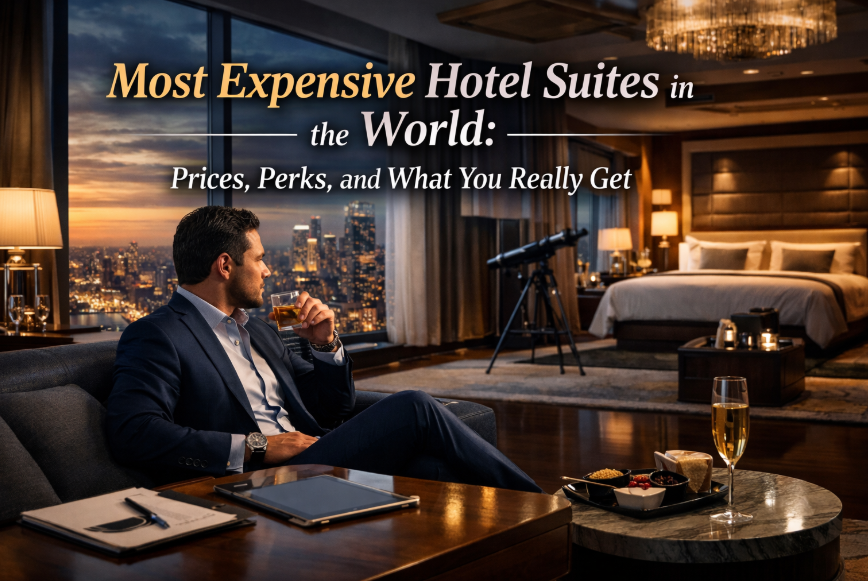
Luxury travel keywords matter because most expensive hotel suites sit at the top of the ultra-luxury hotel market, where premium suite pricing is driven by privacy, prestige, and personalization. If you’ve ever wondered why a five-star penthouse suite can cost more than a supercar per night, you’re not alone—because exclusive hotel suites aren’t priced like normal rooms, they’re priced like private compounds with hospitality wrapped around them. Think of these suites as the “private jet of accommodation”: you’re not paying for transport alone, you’re paying for time, discretion, and a frictionless experience.
Why the World’s Priciest Hotel Suites Cost So Much
The first reason expensive hotel suites command jaw-dropping rates is scarcity, because the highest-tier luxury penthouse suites are often “one-of-one” in a property and sometimes “one-of-few” in a city. When a hotel sells standard rooms, it sells volume, but when it sells a presidential suite or royal penthouse, it sells status plus silence, and that silence is a premium product for high-profile guests. Add in iconic addresses—think Manhattan, Dubai, Geneva, or private islands—and the luxury suite cost per night starts to behave like real estate pricing rather than hospitality pricing.
The second reason most expensive hotel suite prices surge is staffing, because the true luxury is the people, not the pillows. The richest suites don’t just have a minibar; they have a butler team, private chefs, security coordination, drivers, and often a discreet operations squad that runs behind the curtain. Imagine a theater production where the audience sees a flawless show, while dozens of professionals move quietly backstage—this is the operational reality of ultra-luxury hotel service. That staff-to-guest ratio, plus insurance, security protocols, and event-level logistics, builds a hidden cost structure that standard hotel guests never see.
What “Ultra-Luxury” Really Means Inside These Suites
Inside the world’s top luxury hotel suites, space is the first shock, because these rooms often feel like multi-level residences with dining rooms, libraries, fitness zones, and terraces large enough for private receptions. Layout matters for high-net-worth travel, because many guests are working, hosting, or traveling with family and security teams, so the suite must function like a private headquarters. When you pay for a premium penthouse suite, you’re paying for separation—quiet bedrooms, formal entertaining rooms, staff entrances, and soundproofed zones that keep your life invisible.
Materials and details push the price higher because the best suites lean into “bespoke everything,” from custom furniture to rare stone, artisan woodwork, museum-grade art, and signature design identities that cannot be copied at scale. A standard luxury room aims for beautiful; an ultra-exclusive suite aims for unforgettable, like wearing a tailored suit versus buying off the rack. Tech adds another layer of high-end hotel amenities, because privacy-focused guests want smart glass, private cinema systems, multi-room audio, secure connectivity, and seamless climate control. In the premium tier, convenience is the real flex—because the suite is built to obey your preferences without you lifting a finger.
The Most Expensive Hotel Suites in the World
If you’re searching for the most expensive hotel suites in the world, you’ll find a small club of headline-makers that routinely top luxury travel lists. The Royal Penthouse Suite at Hotel President Wilson in Geneva is often cited among the most expensive due to its massive footprint, panoramic lake views, and reputation for hosting high-security VIPs. Prices for iconic suites like this can reach tens of thousands of dollars per night, and during peak demand or special events, the luxury suite pricing can rise dramatically because the “availability value” becomes the product.
Other famous names include the Empathy Suite at Palms Casino Resort in Las Vegas, known for its art-driven aesthetic and celebrity appeal, and The Mark Penthouse in New York City, which sells a Manhattan fantasy of terraces, skyline views, and elite service in one of the world’s most expensive cities. Dubai’s Burj Al Arab Royal Suite also belongs in the conversation because it pairs lavish design with the “Dubai spectacle factor” that premium travelers pay for. Private island options like Hilltop Villa at Laucala Island in Fiji can feel even more extreme, because the experience blends luxury villa privacy with resort infrastructure, which turns the stay into a full lifestyle package rather than a room.
The Perks That Come With the Price Tag
The best expensive hotel suite perks are often transportation and access, because for many high-profile travelers, the real luxury is moving without stress. Some elite packages include private airport transfers, dedicated drivers, fast-track assistance, and coordination with security teams, which turns a chaotic travel day into a smooth, controlled flow. In luxury terms, this is “friction removal,” and VIP hotel perks are designed to remove friction like a vacuum removes dust—quietly, completely, and without leaving a trace.
The next tier of perks is service personalization, because butler service in a top suite is not “someone who brings towels,” it’s a lifestyle manager who anticipates needs. Private chefs, on-call spa treatments, curated wellness, and in-suite dining that feels like fine dining are common in the ultra-luxury suite experience. Then there’s the “can’t-buy-it-easily” category: reservations that appear when they shouldn’t, private shopping appointments, behind-the-scenes access, and event-level concierge power. When done well, these perks make the city feel like it’s cooperating with you, which is the true meaning of premium hospitality.
What You Actually Get—And What You Don’t
Here’s the honest part about most expensive hotel suite value: you get privacy, scale, and service, but you don’t automatically get “everything.” Many guests assume a presidential suite price includes unlimited extras, but luxury billing can be like first-class flying—your seat is premium, yet certain upgrades still cost more. Some suites include breakfast, airport transfers, and butler service, while others charge separately for private chefs, spa services, security arrangements, or special experiences, so the fine print matters if you care about total spend.
Another reality is that “Instagram luxury” and “operational luxury” are not the same. A suite can look stunning online, but the best suites feel better than they look because they work perfectly in real life: quiet AC, perfect lighting, smooth Wi-Fi, and staff that never interrupts. The most elite five-star suite experience is like an orchestra—you only notice it when something goes wrong. Also, expect deposits, strict cancellation policies, and sometimes behavioral rules, because top hotels protect their assets, their staff, and their brand when hosting high-profile guests.
How to Book These Suites Smartly
Booking expensive luxury suites is a strategy game, because timing and leverage matter more at the top than in the middle. If you want better value, avoid major events, peak holiday windows, and high-demand weeks, because premium suites behave like limited-edition products. Booking longer stays can unlock negotiation, because hotels like stable revenue, and a multi-night commitment can justify added perks, upgraded transfer services, or enhanced dining credits. In the ultra-luxury tier, asking for “value” isn’t cheap—it’s smart, because luxury travel optimization is about maximizing experience per dollar.
Working with a luxury travel advisor can help if you want upgrades and perks, because advisors may access preferred partner programs that add breakfast, credits, and priority treatment. Booking direct can also be powerful if you’re loyal or if you have a clear request, because hotels sometimes reward direct relationships with additional benefits. The best approach is to be specific: ask for the exact perks you care about—private transfers, flexible check-in, chef service hours, wellness inclusions—because clarity turns negotiation into a win-win.
Who These Suites Are Really For
The real audience for most expensive hotel suites is not just “rich travelers,” because the core demand often comes from people who need privacy as protection. Royal families, CEOs, entertainers, diplomats, and high-net-worth families value discreet luxury accommodations because reputation and safety are part of the trip. For them, a suite is not a room—it’s a secure base that reduces risk, protects time, and keeps schedules confidential. When you think of it this way, the price becomes less “expensive” and more “strategic,” because privacy can be more valuable than square footage.
There’s also a business logic for premium suites, because a private suite can function like a mobile office with meeting space, security control, and service that prevents distractions. If your time is worth a premium, the suite becomes a tool that buys focus, rest, and smooth logistics. It’s like paying for a high-performance workstation—except the workstation includes silk sheets, a private terrace, and a team that makes everything feel effortless.
Alternatives That Feel Like a “Most Expensive Suite”
If you want the vibe of world-class luxury suites without the headline price, choose villa-style suites, two-bedroom premium suites, or hotel-branded residences that still deliver privacy, space, and service. Many luxury resorts offer multi-room suites with butler service and private plunge pools, and these options can feel just as exclusive while costing significantly less than the “top suite” in a famous property. Think of it as choosing a high-end tailored jacket instead of the runway piece—still premium, still impressive, but smarter for real life.
You can also “buy the feeling” with targeted upgrades: private transfers, in-suite dining experiences, spa access, and lounge privileges often create the same emotional payoff as a massive suite. If your goal is romance, convenience, or a special occasion, the highest ROI often comes from experience add-ons rather than pure square footage. The best luxury strategy is simple: pay for what you will actually use, because unused luxury is just expensive decoration.
Conclusion
The most expensive hotel suites in the world aren’t priced just for size—they’re priced for privacy, people, and precision. When you pay premium rates, you’re really buying an experience where logistics disappear, service feels psychic, and the world stays politely outside your door. If you value discretion, comfort, and elite-level control, the top suites can make sense, but if you value smart spending, you can still get a near-identical luxury feeling through well-chosen alternatives and strategic upgrades.
FAQs
1) How much does the most expensive hotel suite cost per night?
The top most expensive hotel suite prices can reach tens of thousands of dollars per night, especially during peak demand and major events.
2) Do luxury penthouse suite prices include everything?
Many luxury penthouse suites include core perks like concierge and some services, but private chefs, spa treatments, and special experiences may cost extra.
3) Are expensive hotel suites worth it for non-celebrities?
Yes, expensive hotel suites can be worth it if you value privacy, space, and premium service, but alternatives can deliver similar comfort for less.
4) What perks should I prioritize when booking an ultra-luxury suite?
Prioritize butler service, private transfers, flexible check-in, dining credits, and wellness perks, because those features maximize real-world convenience.
5) What’s the best alternative to the most expensive suite in a luxury hotel?
A two-bedroom premium suite, villa-style accommodation, or hotel-branded residence often delivers the same ultra-luxury experience with better value.
Read More